Books and Activities for Poetry Month: National Haiku Day

Bookmark and Share


Happy Haiku Day!

As we celebrate National Poetry Month, we’re focusing this week on haiku.  This is a great format to use with students because it’s so accessible, plus it lends itself well to student writing.  To quote from the lovely author’s note in the back of Dogku, the first book listed below, “Ever feel like there are so, so many words? And how could I ever put some together and make a poem? That’s when a haiku can seem like a lifeboat.”

These are some of the books from my library collection that I’m using. Click the book title to look inside and/or purchase. As an Amazon associate I earn a small commission on your purchase at no additional cost to you.

 Dogku by Andrew Clements, illustrated by Tim Bowers

This book is a great way to introduce the format of haiku to students because the poems work together to tell a narrative of a stray dog (Mooch) who is adopted by a loving family.  You can read the book and enjoy the story at face value, and then go back and examine the elements of haiku in each poem.  Nominated for the S.C. Book Award

  • Have students write a pet-ku about a pet they own or wish they owned
  • Have students research various breeds of dogs and write a dogku that highlights facts about the animal


 One Leaf Rides the Wind: Counting in a Japanese Garden by Celeste Davidson Mannis, illustrated by Susan Kathleen Hartrung

As the title suggests, this book pays homage both to the Japanese origin of haiku and to the traditional nature themes. Each page features our protagonist enjoying a beautiful Japanese garden and includes both a haiku and a paragraph of background information to help readers understand the cultural importance of each element.  The counting theme is an added bonus for younger students.  Copyright 2002, starred reviews from Kirkus and Publisher’s Weekly

  • Have students explore an outdoor area (during the school day or at home) and choose something from nature to write about.  Use this Haiku Lesson Plan from ReadWriteThink
  • Brainstorm other outdoor areas (amusement park, campground, beach, etc) and choose one as the subject for a haiku counting book.  Let each student contribute a poem and an illustration for the book.


 Lion of the Sky: Haiku for All Seasons by Laura Purdie Salas, illustrated by Merce Lopez

Haiku meet riddles with students having the opportunity to guess the object of each poem.  This book is richly yet delicately illustrated, and the large format makes it a good choice to read aloud to a group.  An answer key is provided for those who need it. Copyright 2019, starred reviews from Booklist and Kirkus.

  • View the book trailer here to see samples of the poems and illustrations
  • The author’s note includes tips to help students write their own riddle-ku poems
  • Have students research zoo animals and then use this brainstorming worksheet from the author to help students create Zoo-ku riddles of their own


Guess Who, Haiku by Deanna Caswell, illustrated by Bob Shea

More haiku riddles, this time for younger readers.  Each poem is a clue to a common animal, but there’s a twist: The author’s note includes the information that the hai in haiku means “to make light of” or “to make a joke of” so she highlights that element of play by constructing the poems so that the middle line of each can be covered up and the meaning can still be understood.  An explanation of what a syllable is and how to determine how many are in a line is also provided. Copyright 2016, starred review from Kirkus

  • Have students write new middle lines for the poems
  • As you read each haiku, allow students to draw a picture of the animal they think is being described


 Read, Recite, and Write Haiku by JoAnn Early Macken

Part of the Poet’s Workshop series, this book is an excellent how-to resource for teachers and students who want to do a deep dive into writing haikus.  It’s packed with instructions, tips, and activities to help students develop their poetry writing and performing skills. Copyright 2015, starred review from School Library Journal


Also, check out these additional online haiku resources:

Teaching Kids Haiku with Kwame Alexander – this YouTube video is a great introductory lesson to writing haiku, and Newbery-award-winning author Kwame Alexander knows exactly how to talk to students and hold their attention.  You may also want to get his book The Write Thing which teaches you how to move students step-by-step from ideas, to drafts, to finished works.

Haiku Poem Interactive from ReadWriteThink – provides space for students to brainstorm, write, and add an image to their haiku

Haiku Lesson Plan from Edsitement – a complete lesson plan, including common core standards

Four Tips for Teaching Haiku Poetry from The Butterfly Teacher – lots of good advice plus a free Google Slides Haiku Activity when you subscribe to her newsletter (Note: the printable haiku resources shared on her site are paid items from her TPT store.)


What are your favorite books and resources for exploring haiku with students? Tell us in the comments!



Books and Activities to Celebrate Spring Gardens

Bookmark and Share

Spring Gardens!

Nothing screams SPRING like vegetable and flower gardens sprouting and blooming and calling us outdoors!  Here in the south we don’t watch for snow to melt; we watch for tiny shoots and buds to appear as the nights shorten and the days lengthen and the sun sends its newly warming rays over the earth.

Here are some books from my library collection that I like to use with students that celebrate gardens, whether real, imaginary, or metaphorical.  Click on the book titles to look inside and/or purchase. As an Amazon associate I earn a small commission on your purchase at no additional cost to you.

Muncha! Muncha! Muncha! by Candace Fleming, illustrated by G. Brian Karas

Mr. McGreely is so pleased with his vegetable garden, but pleasure turns to dismay, then frustration, then fury when three determined bunnies start stealing his crops.  How far will he go to thwart the energetic bunnies, and how many ways can they find to outwit him?  This book is an absolute favorite of mine, and it never fails to get a positive reaction during story time.  Students will enjoy reciting the cumulative refrain with you as you read.  Sequels include Tippy, Tippy, Tippy, Hide and Tippy, Tippy, Tippy Splash.  Copyright 2002, starred reviews from Booklist, Kirkus, Publisher’s Weekly, and School Library Journal

  • Classroom Guide from the author
  • Activity Guide
  • Have students brainstorm other ways the farmer could keep the bunnies out of the garden and then draw their designs as blueprints or illustrations
  • Pair this title with Those Darn Squirrels by Adam Rubin, which chronicles Old Man Fookwire’s desperate efforts to keep the squirrels out of his birdfeeders


In a Garden by Tim McCanna, illustrated by Aimee Sicuro

Rhyming books can be hit or miss, and this one is definitely a hit!  McCanna includes dozens of insects and plants in his text, and the soft watercolor illustrations allow the reader to see what the narrator does not.  The author’s note discusses the history of gardening.  Copyright 2020, starred review from School Library Journal

  • Enjoy this video of the author reading the book aloud, visiting a real garden, and singing
  • Have students research the animals mentioned in the text and write “fun facts” on sticky notes to place in the book


Have You Ever Seen a Flower? by Shawn Harris

This book goes far beyond a surface examination of a flower and takes readers on a journey involving all five senses, and pushes them to explore a deeper experience beyond what they can see with their eyes.  From the publisher: “Looking at a flower teaches us to look at everything around us, to expand our perception, and to question what it means to see and be.”  Copyright 2021, Caldecott Honor Book, starred review from Publisher’s Weekly.


The Imaginary Garden by Andrew Larsen, illustrated by Irene Luxbacher

When Poppa has to move to an apartment, he and his granddaughter Theo miss the garden they used to tend together. His balcony is unfortunately too windy for real flowers but he has a solution: an imaginary garden.  The two happily use paint and brushes to create an imaginative mural bursting with bold, bright colors (in stark contrast to the spare pen-and-ink look of the apartment building).  This book is much a celebration of intergenerational relationships as it is of gardens.  Copyright 2020, starred reviews from Booklist and Book Links.

  • Use these Storytime Suggestions
  • Tape a large piece of bulletin board paper to the wall and allow students to add their own garden elements to it using markers, crayons, or paint
  • Pair this book with Caldecott Honor Book The Gardener by Sarah Stewart, another tale of a child creating a garden in a limited apartment space


If You Plant a Seed by Kadir Nelson

Let me say up front that Kadir Nelson is one of my favorite illustrators, so any book by him is likely going to appeal to me.  In this lush picture book, he uses the garden as a metaphor for “reaping what you sow” in terms of the way you treat others.  The rabbit and mouse plant their vegetable seeds and delight in their harvest, but turn selfish when various hungry birds want to partake.  In a happy ending, the animals choose to cooperate with kindness to create a bigger garden, with food for all.  Copyright 2015, starred review from Publisher’s Weekly.


Rabbit and Squirrel: a Tale of War and Peas by Kara LaReau, illustrated by Scott Magoon

Silliness abounds when rabbit and squirrel begin accusing each other (falsely, as the reader can see) of stealing vegetables from the other’s garden.  The squabble escalates into full-on war, until both are banished to the woods.  The open ending is a nice starting point for a discussion on misunderstandings, and making peace after a disagreement.

What are your favorite spring garden books?  Please share in the comments!


Books and Activities to Celebrate the Arrival of Spring

Bookmark and Share

Welcome Spring!

As we approach spring break, my thoughts are turning to the way the earth slowly wakes up from her long winter’s nap each year.  Are you as ready for it as I am?  What better way to celebrate the arrival of spring than by enjoying some books that take us through that lovely process!

Here are some books from my library collection that I like to use with students that beautifully capture the transition from winter to spring.  Click on the book titles to look inside and/or purchase. As an Amazon associate I earn a small commission on your purchase at no additional cost to you.

On a Snow-Melting Day : Seeking Signs of Spring by Buffy Silverman

This lively rhyming book is a poetic ode to the passing of winter.  It’s illustrated with an array of colorful photographs, and the end notes include facts about the plants, animals, habitats, and weather events mentioned in the text.  Take a look at On a Gold-Blooming Day  and On a Flake-Flying Day as well.  Copyright 202, starred review from Kirkus

  • Use this poetry-writing lesson plan – written by the author – with your students
  • Allow students to identify and discuss the many types of figurative language the author uses
  • Pair this nonfiction title with the fictional William Wakes Up by Laura Ashman, another rhyming book which shows little boy William and his animal friends waking up from a long winter nap and seeing signs of spring


 Up in the Garden and Down in the Dirt by Kate Messner, illustrated by Christopher Silas Neal

Not gonna lie, I love all Messner’s Over and Under books, and this is probably my favorite in the series.  It’s a nonfiction title, but it reads like a narrative.  From the publisher: Up in the garden, the world is full of green–leaves and sprouts, growing vegetables, ripening fruit. But down in the dirt exists a busy world–earthworms dig, snakes hunt, skunks burrow–populated by all the animals that make a garden their home.”  Neal’s illustrations are full of fabulous details for the reader to pick out.  Copyright 2015, starred review from Library Media Connection

  • Download a reading guide for the book
  • Have students draw their own garden illustrations showing what’s growing on top and what’s happening underneath
  • Download the Kate Messner “Over and Under” series author study guide
  • Pair this nonfiction title with the fictional Caldecott Honor Book Tops and Bottoms by Janet Stevens, a trickster tale involving Hare getting the best of Bear each season as he plants crops that ensure him a bountiful harvest while Bear is left with the useless stalks, roots, and tops of the vegetables


Snowman – Cold = Puddle: Spring Equations by Laura Purdie Salas, illustrated by Micha Archer

Salas is known for her innovative approach to writing nonfiction books, and title cleverly features a playful math equation on each page as math meets metaphor with a sprinkling of science to explain each of the signs of spring.  The tissue-paper collage illustrations are a bonus (y’all know I love collage art!), depicting children reveling in a glorious spring world. Copyright 2019

  • Download the activity guide for the book
  • Visit the author’s website for more information and activity ideas
  • Use this STEM lesson from the author to guide students to write their own science equations
  • Pair this title with A Leaf Can Be, written by the same author, which depicts a leaf’s various purposes throughout the four seasons


When Spring Comes by Kevin Henkes, illustrated by Laura Dronzek

The perfect pairing of words and illustrations, this book for slightly younger readers reminds us that we must be patient as we look at the bare trees and brown mud and sloshy snow and gray skies, because when spring comes (quickly or slowly, it changes its mind a lot) you will feel it, you will smell it, and you will hear it.  Take a look at his other three “season” books, Summer Song, In the Middle of Fall and Winter is Here, for future story times.  (Fun fact: Kevin Henkes and Laura Dronzek are husband and wife. No wonder the text and pictures are woven together so well!)  Copyright 2016, starred reviews from Booklist, The Horn Book, and School Library Journal

  • Use this Story Circle lesson with free printable pocket-chart cards
  • Provide sidewalk chalk and allow students to go outside and draw spring pictures inspired by the book illustrations
  • Pair this title with Bloom, Boom! by April Pulley Sayre, which is a stunning photographic look at the flowers of spring, described in rhyming couplets, that also contains an appendix with further information that allows it to work as a science resource as well as a read-aloud


Spectacular Spring: All Kinds of Spring Facts and Fun by Bruce Goldstone

Spectacular is right!  I tend to prefer photos in nonfiction books, and these do not disappoint.  This vibrant book is bursting with color, and each page layout is a pleasing mix of text and images.  Topics include the usual plants, animals, and weather, but Goldstone also invites readers to appreciate the sounds, smells, textures, and emotions of spring.  Instructions for 6 spring activities for students are included at the end of the book.  And by the way, don’t miss the other books in the series: Super Summer, Awesome Autumn, and Wonderful Winter!

What are your favorite books about the anticipation of spring?  Please share them in the comments!


Create Your Own Book Cover Bingo Cards

Bookmark and Share

Happy Read Across America Week!  We have several activities and spirit days planned at my school this week, including something new: Book Cover Bingo!

By using the Bingo Baker website I was able to create custom Bingo cards featuring images of books I know most of my students will recognize. You can search for premade cards, or you can create your own cards from scratch.  You can use words, numbers, or images — or a combination of all three — and choose the size of the grid you want to use (3X3, 4X4, 5X5, 6X6, or 7X7).  You can even play question & answer bingo!  Print your cards out to play in person, or share a link with users to play online.

I made two sets of cards; one featuring picture books for younger readers and another set with chapter books for older readers.  You’re welcome to use them as-is, or edit them to suit your needs.

Note that with a free account you are limited in the number of cards you can print out.  I ended up purchasing a lifetime membership so that I could print enough for each grade level, but I know I’ll be using the site many more times so I feel like it was a good investment.


Valentine Books and Activities for Students

Bookmark and Share

Love – or at least like – is in the air, and valentines are changing hands.  Valentine’s Day is a big deal in elementary school, and these books and activities will help you celebrate with your students without getting too mushy!

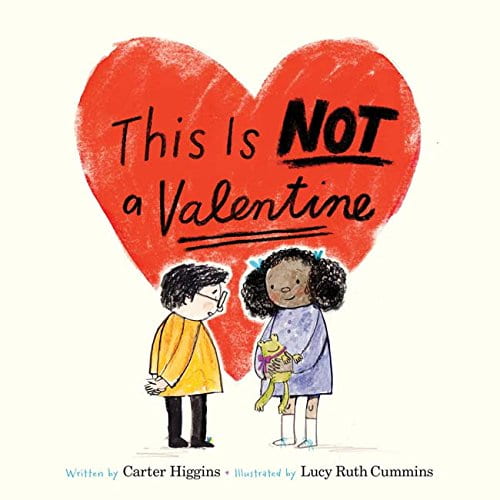
This is Not a Valentine  This is Not a Valentine – written by Carter Higgins, illustrated by Lucy Ruth Cummins
A book for when you care about someone, but not in a romantic, sugary kind of way; for when want to show you like someone every day, not just one day a year; for when you have a true friendship and want to make sure the other person knows how you feel.

This is a great book to reinforce the idea that Valentine’s Day isn’t just for boyfriends and girlfriends but rather for all friends.  The illustrations depict an inclusive classroom, and the ideas for showing someone you care are meaningful and practical for the elementary audience.


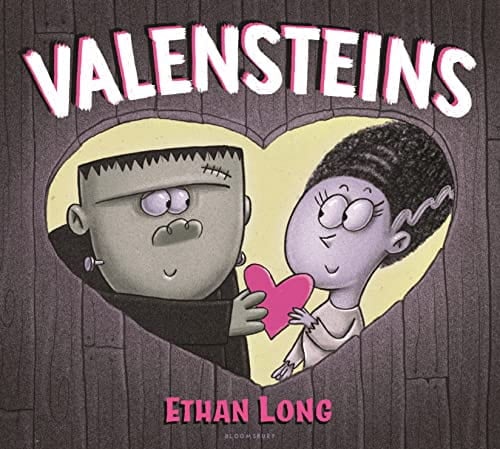
Valensteins  Valensteins – written and illustrated by Ethan Long
The members of the Fright Club are all wondering what Frank K. Stein is making with his scissors and pink paper.  Of course, the kids will know right away but that won’t stop them from giggling at all the wrong guesses before the valentine is revealed!

Choose this read-aloud for your younger students who want a silly story for Valentine’s Day.  This book is part of the Fright Club series, which features funny/scary stories about ghosts, werewolves, and of course Frankenstein for your readers and listeners.  You can find somefollow-up printable activities at the author’s website.


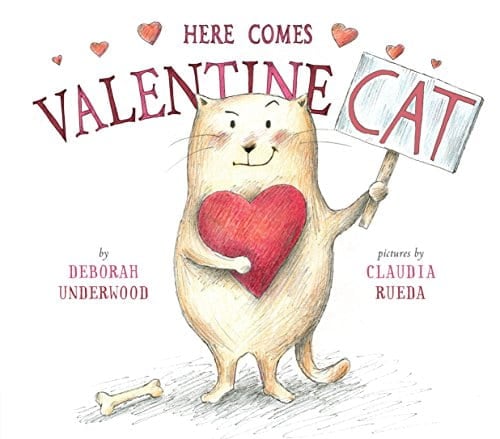
Here Comes Valentine Cat  Here Comes Valentine Cat – written by Deborah Underwood, illustrated by Claudia Rueda
Cat does NOT like Valentine’s Day. It’s much too mushy, and no way is he making anyone a valentine—especially not his new neighbor (Dog) who keeps throwing bones over the fence and hitting him in the head!

Your students will have fun making predictions and writing their own valentine messages from Cat to Dog when you share this book.  My introduction to this Here Comes Cat series from Underwood and Rueda was the book Here Comes Santa Cat, and I was instantly in love!  The expressions on Cat’s face in EVERY illustration are absolutely spot on, and the stories are brimming with humor.  See for yourself in this Valentine Cat read-aloud video from Brightly Storytime.


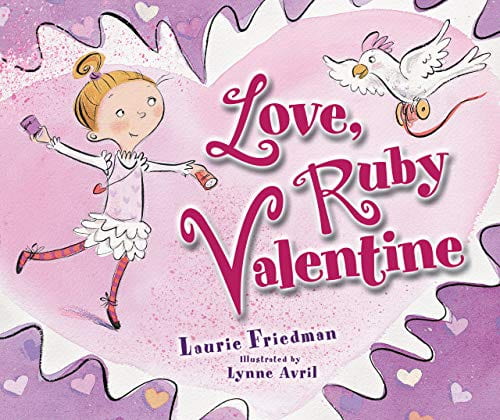
Love Ruby Valentine  Love, Ruby Valentine – written by Laurie Friedman, illustrated by Lynne Avril
Ruby works so hard preparing treats for her friends that she sleeps right through Valentine’s Day.

This book sends a lovely message about doing for others, as opposed to thinking only about what you’ll get on Valentine’s Day, and provides an important reminder that you can show appreciation for your loved ones any day of the year.  You might need a little practice with the rhythm of the rhyming text, and there’s a lot of small detail in the illustrations so it’s best to use a document camera if you’re sharing the book with a group.

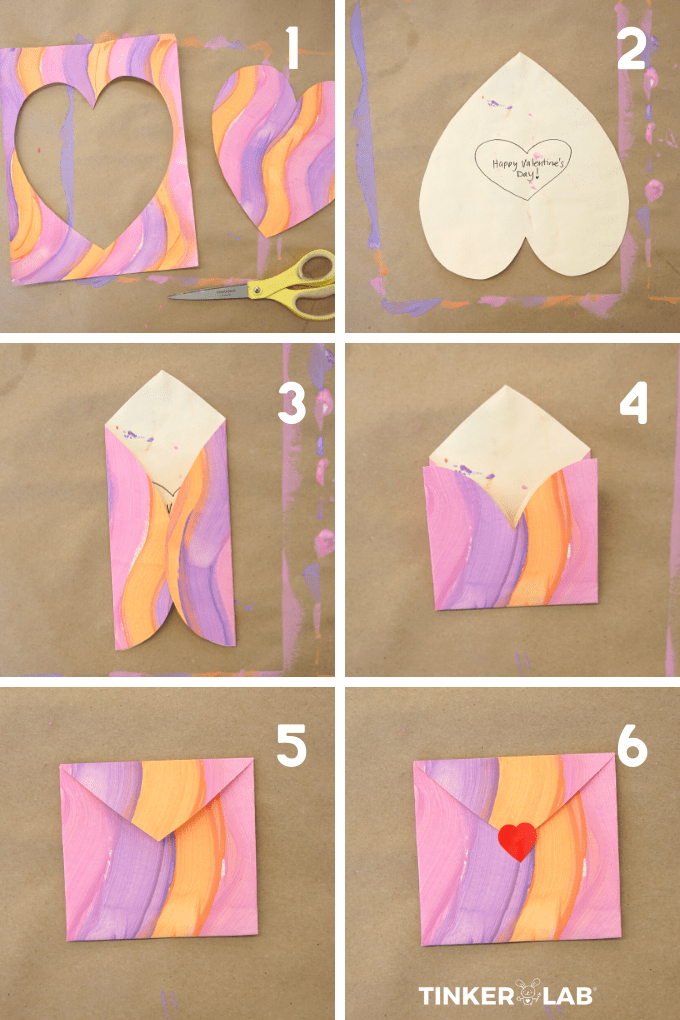
Our follow-up activity when reading this book is to use origami paper to create valentines that fold up into their own envelopes.  You can find the directions at the Tinkerlab website, which includes a great step-by-step photo tutorial.

Thanks for stopping by, and I hope you’ll share your winning Valentine read-aloud books in the comments!


Read Aloud Polar Bear Nonfiction Books

Bookmark and Share

Nonfiction Polar Bear Books

My last post was focused on polar bear fiction books and included a variety of activities to go with them, so today I’m going to share some nonfiction titles that make good read-alouds.  Criteria for inclusion in this list includes narrative style with nonfiction text features, large format for group sharing, and of course plentiful facts for learning!

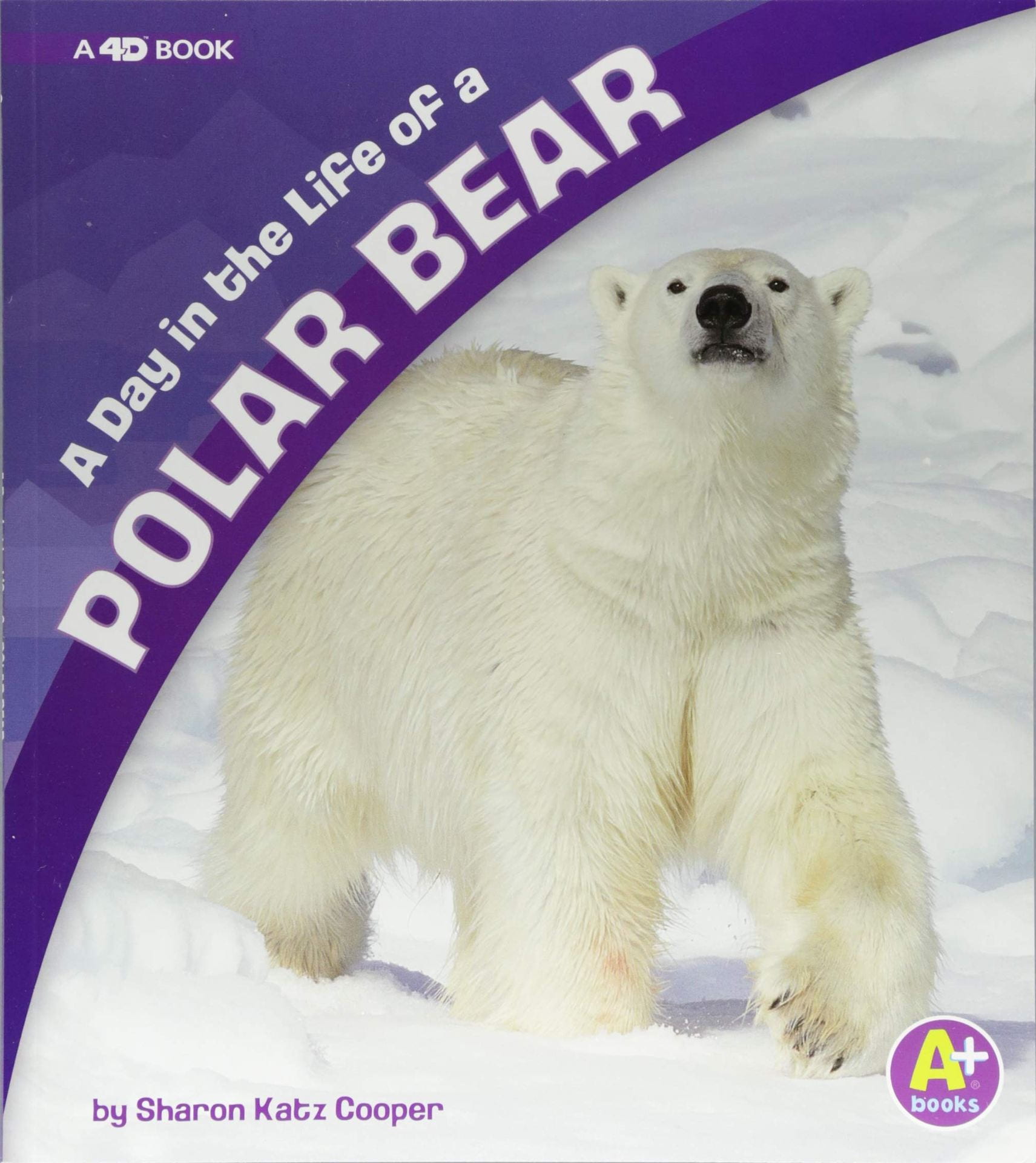
Day in the Life of a Polar Bear  A Day in the Life of a Polar Bear – by Sharon Katz Cooper
Follows a mother polar bear throughout her day with her cubs as they hunt for food, swim, play, bathe, and go to sleep.

I like this book because it includes action-packed photos that actually relate to the information being shared, rather than just stock photos of random polar bears walking around.  The text is quite child-friendly and lends itself to a chronological retelling by students (perhaps even using a Judy clock to reinforce the skill of telling time).  Includes a “Polar Bear Lifecycle” diagram and some critical thinking questions.

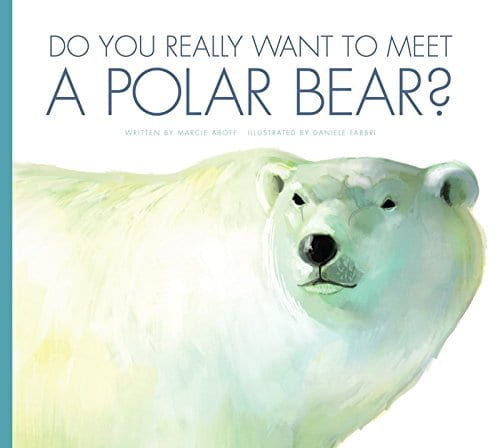
Do You Really Want to Meet a Polar bear  Do You Really Want to Meet a Polar Bear – written by Marcie Aboff, illustrated by Daniele Fabbri
The hero of our story, a bored student researcher, decides to visit the Arctic and learn about polar bears firsthand.

This book (which is part of a series that includes a dozen other animals) is a great introduction to an animal research project, and presents a perfect opportunity to compare primary and secondary information sources.  It’s also told in the second person, addressing the listening audience directly.  The author includes a collection of simple facts, along with a glossary and a bibliography of additional books and websites for curious readers.

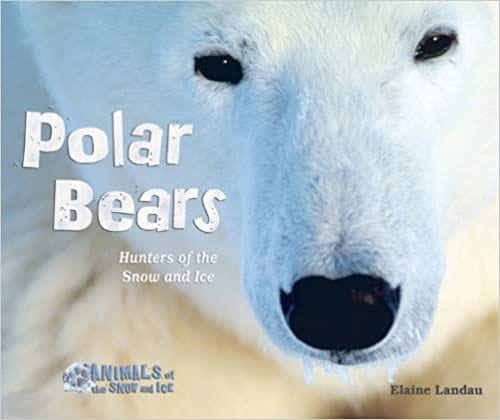
Polar Bears Hunters  Polar Bears: Hunters of the Snow and Ice – by Elaine Landau
Learn all about the life of a polar bear, including its characteristics, habitat, diet, mating season, and threats to its way of life.

The text in this book is a little more dense than the previous two, but it’s still relayed in a second-person conversational style that will grab listeners’ attention and put them in the center of the action.  Most of the photos are large and clear (although the book itself is not oversized) and there are a few nice closeups of the clawed paw and hollow fur.  The author includes a page of fun facts about polar bears, along with a glossary and a bibliography of additional books and websites for further exploration.

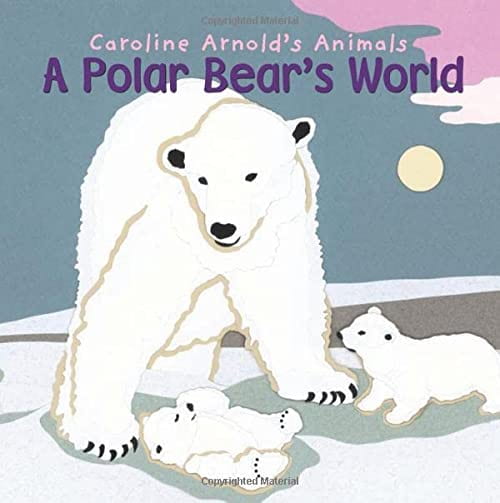
A Polar Bear's World  A Polar Bear’s World – by Caroline Arnold
Find out what happens in a polar bear’s world when mother and her two cubs venture from their warm den into the Arctic  world.

Physically, this is the largest of these four books, measuring almost 11″ x 11″ and it features cut-paper illustrations (versus photos) that are easily seen in a group setting.  The main story is told in narrative fashion, with caption boxes providing additional facts and statistics on each page, and follows a mother and her cubs for the first two years of their lives.  Labeled illustrations of other arctic animals the bears encounter are included, although no other information about them is provided.  The author does include a map of their native habitat, a list of polar bear fun facts, and a glossary.  The author also shares a variety of follow-up activities for her books on her website.

If you have a favorite nonfiction polar book to use with students, I hope you’ll share it in the comments!
 

Polar Bear Books and Activities for Learning in the Library

Bookmark and Share

Polar Bear Fiction Books

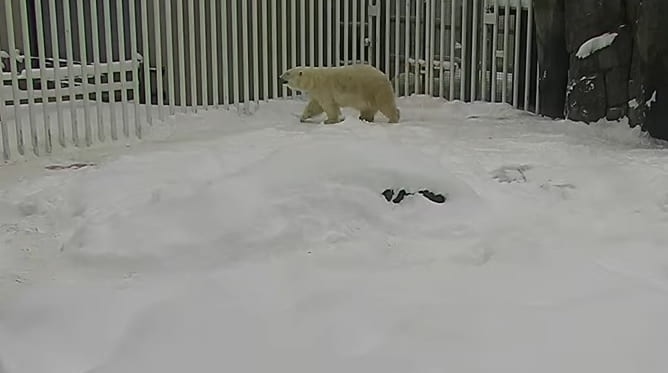
We haven’t had any snow (yet) this year, but that won’t stop us from enjoying some polar bear fun in the library!  After all, February 27 is International Polar Bear Day and these animals need our help.  Polar bears happen to be one of my all-time favorite animals, thanks in part to the amazing polar bear exhibit we used to have at the Riverbanks Zoo in Columbia, SC.  There was an underwater viewing window in their habitat where I would gaze completely enthralled at the playful bears, just longing to swim with them.  That exhibit closed long ago, so now I have to settle for tuning into a polar bear zoo cam.  (I’ve included links to a few at the end of this post.)

Polar bear live cam image

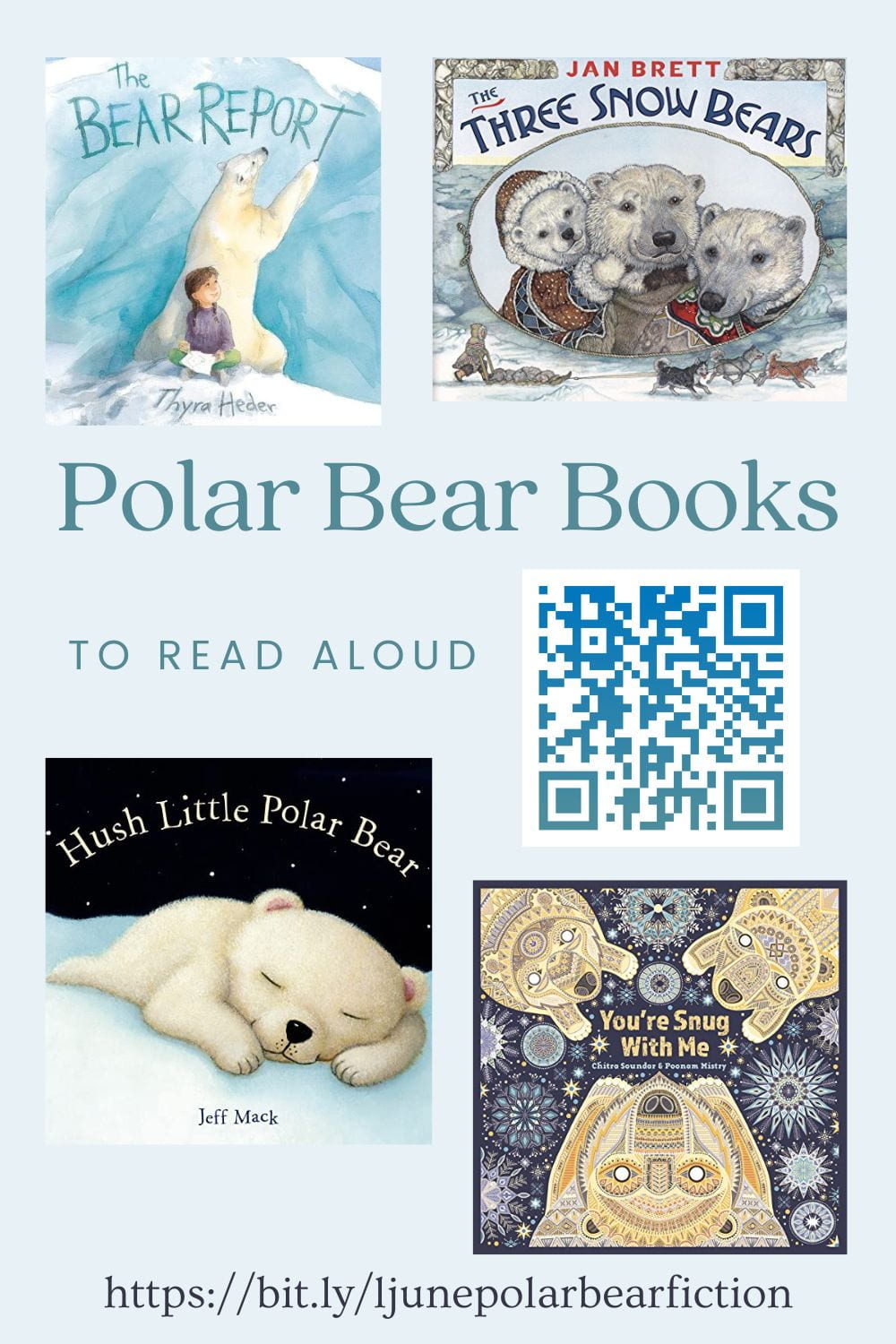
In the meantime, I can enjoy sharing polar bear books like these with my students:

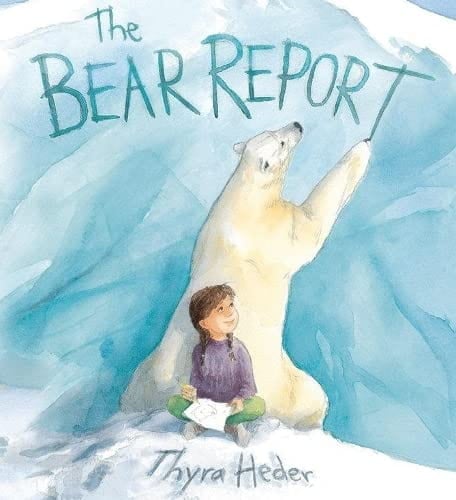
The Bear Report  The Bear Report – written and Illustrated by Thyra Heder
Sophie seems a little bored by the polar bears she’s supposed to be reporting on, but when one (named Olafur) appears and takes her on a tour of his home she becomes a big fan. Includes an author’s note about her trip to Iceland.  And may I say, I really love these light-infused illustrations!

It’s obvious that this book makes a great introduction to a unit on researching and writing about animals, and the idea of Sophie taking a tour of a polar bear habitat provides a natural introduction to using videos as information sources in addition to using print resources.  Along with presenting facts (in narrative style) about polar bears, this book also touches on whales, seals, arctic foxes, and glacier mice as well, which makes it a good segue story into other polar animals.  And there’s also a mention of the northern lights, which would make a perfect prompt for a watercolor project.

You can also share a video school visit presentation by the author.

  You’re Snug With Me – written by Chitra Soundar, illustrated by Poonam Mistry
A mother bear has given birth to two cubs, and as they snuggle cozily together she shares a lyrical description of what the world is like beyond their warm den.  Try to use a document camera or ebook version of this story when sharing with students, because the dazzlingly intricate illustrations deserve close-up examination.

As someone who enjoys zentangle and mandala drawing myself, I was immediately inspired to pick up a pen and create some drawings of my own, so I searched out some line-drawing clip art of polar animals to give my students so they could try some patterns themselves.  If your kids don’t have time to draw their own patterns, Teaching Books has some coloring sheets available for download.  The author also provides some activities on her website.

Note there are two other gorgeous books in this series: You’re Safe with Me about a mama elephant, and You’re Strong with Me about a mother giraffe.

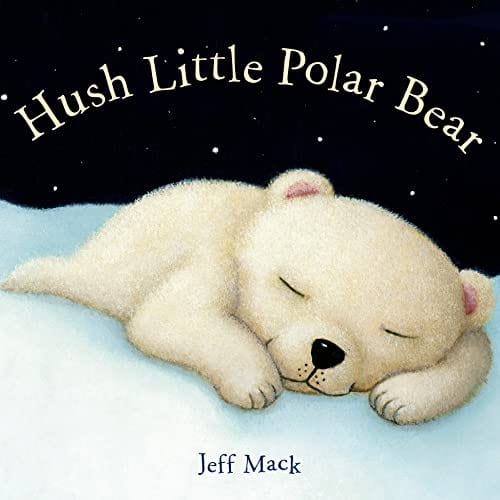
Hush Little Polar Bear  Hush Little Polar Bear – written and illustrated by Jeff Mack
Follow a little polar bear through his dreams to places anyone would love to visit: the beach, the farm, a waterfall, the jungle, and more until finally he drifts into the home of a sleeping girl who dreaming of polar bear travels herself.

The rhyme scheme of this book totally lends itself to singing the words (to the tune of Hush Little Baby), although it’s a bit long for a performance.  Naturally it makes a wonderful bedtime book to send home with your younger students, and it would make a sweet bedtime song.  You can find instrumental versions of the song on YouTube.

I like to use this book as the basis for an art exercise, where I read the words to the students but I don’t show them the pictures.  Students then either activate prior knowledge about the locations in the story or use their research skills to find out about them.  They then create their own illustrations to share with the class.

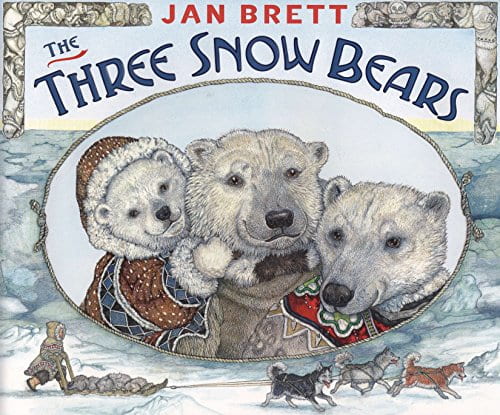
Three Snow Bears  The Three Snow Bears – written and illustrated by Jan Brett
A retelling of the Goldilocks story substituting polar bears for woodland bears, Brett incorporates elements of the Inuit lifestyle into this entertaining story.  As we enjoy the tale of Aloo-ki investigating the bears’ igloo and then getting caught by them, we also follow the story of the bears’ day out as well as the adventure her own huskies have when they float out to see on a loose patch of ice.

This is another book that students will want to get a good look at, as the drawings in the margins are rather small, so a document camera or a small-group setting would be best.

Brett always scrupulously researches clothing when she’s drawing characters from other cultures, and the designs she used in this book can be compared to the Indian patterns in You’re Snug With Me.  For this book she traveled to Iqualuit, capital of the Nunavut Territory in northern Canada, to meet and learn about the Inuit people. Read her newsletter to learn more about how she prepared to write this book.

This makes a great addition to a fairy tale comparison unit, but it’s also a fun stand-alone story.  You could also compare it to similar books by Brett, such as Trouble With Trolls (inspired by a trip to Norway), and The Mitten which has a Ukrainian influence.  Or you could contrast it with her Three Little Dassies which features bold African printed clothing, and the Persian folktale The Tale of the Tiger Slippers.

Tomorrow I’ll share some of my favorite nonfiction Polar Bear books.  In the meantime, please share your favorite polar bear books and resources in the comments, and here are the links to the Polar Bear Cams I promised you: